
Our Conservation Officer, Laura, has had a very busy year speaking to landowners, surveying sites and working with the Local Wildlife Sites partnership to propose the designations.
Exciting news for local wildlife
Last year, we launched our appeal to help us identify and designate new Local Wildlife Sites. Our aim was to designate 10 new sites. We’re absolutely delighted to share that following a busy survey season, 12 new sites have been designated!

Laura says:
“After months of surveying, vast amounts of admin, and some very long Partnership meetings… I feel proud to have got so many new Local Wildlife Sites selected. It’s a comfort to know they will soon be considered within local planning policy.
"It’s great to hear the positive feedback from landowners too, many didn’t realise how special their land is for wildlife, and some are considering even more nature-friendly ways to manage these precious habitats based on my surveys and advice.
“We’re so grateful to our supporters for making this all possible”.

WildNet - Richard Burkmar
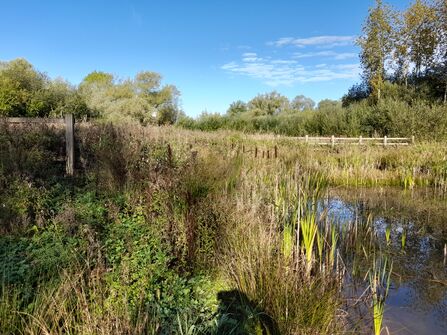
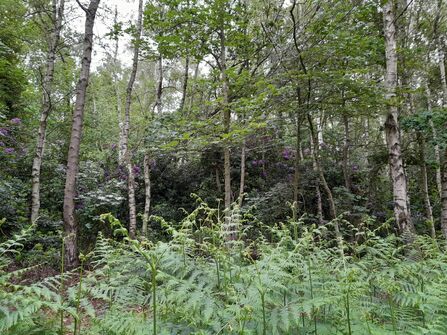
Here are some highlights of the new designations:
- Hassall Green Nature Reserve near Alsager (The Land Trust) for it’s mosaic of habitats that supports roosting bats and grass snakes.
- Winsford Ponds for a very large great crested newt population on an ecological mitigation area at Winsford industrial estate (pictured above, left).
- A churchyard near Nantwich for acid grassland including species such as mouse-ear hawkweed, sheep’s sorrel and violets.
- A steep-sided valley near Crewe, home to more acid grassland, meandering stream, and orchard habitats.
- Two sites south of Nantwich: one site home to dry oak/birch and wet alder woodlands on peat, and a very old orchard (pictured above, right).
- A younger apple tree orchard has been designated on a university campus.
- Two woodland sites in the Lindow area of Wilmslow: secondary woodlands on peat, near Saltersley Moss, with areas of heather and bilberry (pictured above, centre) in ground flora.
- South of Wilmslow, a stretch of meandering brook and associated floodplain grassland, alongside a busy bypass.
- A species-rich grassland near Manchester Airport home to many species, the most interesting is tor grass which is locally rare in Cheshire.
- Species-rich grassland at Ashton Grange (private land), near Delamere for its rich flora including species such as tormentil, betony and heath marsh orchid.
Kate and Martin Slack, of Ashton Grange, said:
"When we bought the field in 2017, we were aware that there were some areas of wildflowers, but we had no idea of the wide range now revealed by the Local Wildlife Site survey. Being able to enjoy seeing the increasing range and number of wildflowers in our small site is a wonderful privilege, which we hope to preserve for future generations.”
In addition to these sites, we were delighted that two of our very own Nature Reserves were also designated: part of Picton Pastures for birds such as marsh harrier, snipe and water rail and Greenbooth for waxcaps.
What happens next?
We’re continuing to work with landowners to finalise our Local Wildlife Site register and distribute this to the Local Authorities for consideration in planning policy. Additional Local Wildlife Sites have been proposed, but further work is needed to finalise these.
We continue to work with our partners on these highly important sites, including a site on the Wirral and a swift colony in Warrington. You can read more about the swift colony on our website.